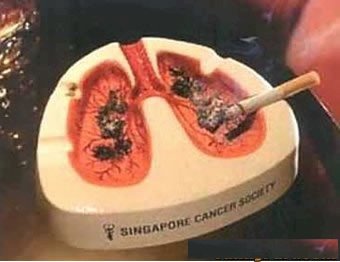
 Smoke? Well then, use this, and only this.
 Friday, September 29, 2006

Who supports terrorism?


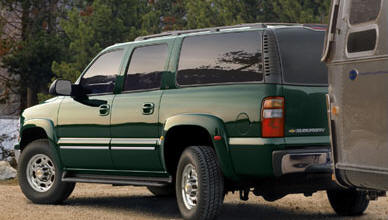




America does is the simplest way: oil-wasting vehicles haulling only one person or few persons. Waste, waste, waste and the terrorist organizations love it! When you don't care, you support terrorism. Buy drugs, support terrorism. If you think I'm wrong, research what Afghanistan exports -- drugs and weapons. How would Iraq ever be able to support terrorism ... ah, yes ... oil. Which country consumes the most oil of any nation ... hmm... the US. Slow terrorism, stop buying fuel-inefficient vehicles. If they aren't bought, new ones won't be built and America will have models that actually get better gas mileage.
Govenor of California -- Arnold, why own Humvees? A state with energy and pollution problems and the govenor demonstrates great waste. To all of America, set an example ... don't feed, cloth and house terrorists -- stop being wasteful. Dump the SUVs. Dubai has built an artificial island found the wonders of oil sales.
Last sampling of news today
One could dwell on any part of this, but more telling is the none-too secret depth to which extemists will carry out revenge against enemies. I would like to believe that their enemies are only the standing armies in the Arab regions, but that isn't so. If non-Iraqis were to pull out of Iraq+ now, then they would find "old" enemies to smite -- likely Israel. I don't ever see an end to their seeking Isreal's removal from the planet. The underscored theme here, "revenge" will really is questionable when they would be satisfied. How about saying a number, eh? Give a death toll for a ballpark. I think if more likely that the number would be "all non-Muslims"
+ I was not a supporter of the war, but pragmatically, there is no good, safe way to mass pull out of troops from Iraq and Afghanistan.
Finding them was easy
Foley, as chairman of the Missing and Exploited Children's Caucus, contacted a 16 year old male. There are questions as to the content and focus of the conversation, but the "page" reported his choice to end the emailing as he was upset with them. I'm sure we're going to hear more about this little thing pretty soon. Sad that he didn't keep up with his (first link) agenda to keep Children safe, even from their parents.
Especially sad was that nobody came
Depression Day Oct. 5
Indiana University-Purdue University will mark Depression Awareness Day on Oct. 5 with a free community event 11 a.m. to 7 p.m. in the Walb Student Union. Display booths, educational handouts and individualized screenings with a mental-health professional will be available. Presentations at noon and 6:30 p.m. are scheduled, and from noon to 1 p.m. a video and discussion in Room 222 Walb Student Unionwill address depression on college campuses.
♦From noon to 1 p.m. Oct. 3, IUPU will host “What Happy Faces are Hiding: Talking About Depression” in the Student Union Ballroom. The free event, open to the community, will offer a personal story that frames mental-health issues in real-life language and examples.
Jerk fails suicide test
Try as he might, this rude, caustic athlete couldn't even kill himself correctly. I guess being knocked around on the field impaired his vision, or maybe it was the drugs, either way -- he's alive. I'm sure the number of people he has agrieved are not relieved with his resilience in the face of this "attempt". His publicist found him. How uncanny that a person vying to get a better reputation for this punk now has a pity card to play out, making him vulnerable regardless of his history of being a snotty jerk or any other deragatory comment that might be reasonably made.
Munchies, Munchies are the best
especially when you're caught trying to fix something, in a place you don't own (Dominoes), at a time that it isn't open, and when you are supposed to have access (ex-employee). In the end, the wonder plant didn't do wonders for this high and mighty couple working their way up the judicial system in great form. I think this is the time to step in and either -- take a lung from each or make sure they don't produce; and I'm not referring to marijuanna.
Thursday, September 28, 2006
From Polly Klaas Foundation (maybe be common)
 | ||||||||||||||||||||||
 | ||||||||||||||||||||||
 | ||||||||||||||||||||||


 Tell a Friend


| |
Visit the web address below to tell your friends about this. Tell-a-friend! Tell-a-friend! |
| If you received this message from a friend, you can sign up for Polly Klaas Foundation. |
| This message was sent to eledteacher@earthlink.net. Visit your subscription management page to modify your email communication preferences or update your personal profile. To stop ALL email from Polly Klaas Foundation, click to remove yourself from our lists (or reply via email with "remove" in the subject line). |
 |

I name thee, death
A tattoo on a prisoner's forehead naming his vicitim. Personally, as long as it leads to his death -- I'm okay with it. I wouldn't, however, be surrprised if he had done it himself hoping to be permanently removed from general population. I don't buy it and think that if you did the crime, you should do the time -- or death. Dear Indiana prisoners, I dare you to kill him.
Now that ought to do it!
Baghdad turns to Los Angles for model
Bodies dumped in several locations, slain, executed. Now ... how would they ever read about how to do that? I got it! They had the L.A. Times in Farsi, right? The gangland killings are, well, amatuerish in contrast to LA gangs, but those responsible promise to better research how the gangs operate and slaughter their enemies despite police observing and known anti-gang and racist tenedencies toward minorities in profiling and sadistic aprehension. An off-handed comment was made that, "the next time will be so much more professional, you'd think that this was to become little LA".
Hewlett Packard in Print
Sadly, it's not for grand reviews, but rather legal problems. Good news for the company is that many people will use HP printers to print off important sections ... like the news of their spying. Gee! I wonder if that will affect their company at all? They didn't hurt customers, so ... as far as customers go, they were shielded from the whole mess.
Chumpanzee
Late, I know, Bill went ape on a FOX News question. While inexcusable, I can see the thought process ... "Prelude to 9/11" had Clinton painted in a bad way. Some of the would-be scenes were edited or omitted, but in the end, Clinton looked inept and not jumping on chances when he could have to stop terrorists and maybe bin Laden. He succeeded in pressuring the producers to edit it -- so he thinks he wins. A poor loser with a temper matched only with his ego (remember the Presidential scandals and his reactions) pulled a Jerry Springer guest with a simple question.
I think, already on the defensive from the movie and other disagreeing with him, the question smacked (in his mind) of "why didn't you do something about him". Overburdened with assaults to his ego -- Clinton lets go of repressed agression to a question unworthy of anger. I would say that democrats talking on the FOX News channel are met with as much contempt as their countparts on CNN. I would therefore note to future guests on either netwrok, that if you aren't with them -- 95%, you are then against them. Be prepared.
Any guest that I have seen try to talk, are instantly interrupted and other speak over them rudely, denying that they have a voice or opinion whatsoever. Suffice to say, that either you go there to take the abuse, hoping to make a half point or a point while being lambasted or you are a fool thinking that you'll get a fair run. Neither or no network allows a real discussion without interruptions.
Clinton ... you pulled a Clinton
HDD Units (posted after sent by Jim)
Happy 50th, hard drive. But will you make it to 60?
Threatening HDD, flash memory will soon be available in 64GB capacities -- with larger devices coming
September 26, 2006 (Computerworld) -- After 50 years, the useful life of the hard disk drive (HDD) is increasingly being threatened by SDRAM and flash-based semiconductor solid state disk (SSD) storage. For example, Samsung Electronics Company Ltd. has announced plans to release a 64GB solid state disk drive in a 2.5-in. form factor with an IDE/ATA or Serial ATA interface. And current 32GB flash memory is selling for $1,800 or less. So the questions are, Is SSD ready to surpass HDD in capacity and price? And, Has the HDD reached the physical limits or can the technology be pushed further?
Over its 50-year life span, the HDD has evolved from a 5MB storage device with 50 24-in. disk platters about the size of a household refrigerator to a 1-in. 8GB device found in Apple iPod and other MP3 players. Physically larger than the 1-in. HDDs found in consumer MP3 players and cell phones, 7,200-rpm, 3.5-in. HDDs have capacities of 750GB priced in the $400-to-$500 range with even larger 1TB HDDs just around the corner. For a good HDD synopsis and history, check out the recent Computerworld piece "From Elvis' hips to spinning disk: 50 years of innovation."
|
| |

To remain viable as a storage technology, HDDs must continue to improve on price, reliability, durability, power consumption, footprint, capacity and performance (see Figure 1). Perpendicular recording technology that is replacing longitudinal recording on HDD combined with other enhancements should extend the useful life of the HDD for about another 14 to 15 years. Researchers like Mark Kryder, chief technology officer of Seagate Technology, estimate that perpendicular recording combined with other technology enhancements should enable the HDD to evolve out to around 2020.
At some point before then, a major technology shift or revolution will be required unless a significant breakthrough in physics and material composition among others can extend the HDD even further. What this means is that since it takes about five years for a technology to be fully integrated into an ecosystem like the storage industry, to be available around 2020 would need to understand what the replacement technology will be sometime around 2015 or so. While 2015 is less than nine years away, that still leaves plenty of time before you will need to unplug your existing storage systems.
Storage technologies or disk systems traditionally have been replaced on three-to-five-year cycles that should enable users to deploy several more iterations and generations of HDD-based storage before some new technology is defined and developed and products are ready for mission-critical deployment. We should start seeing signs of a new major technology shift in about nine to 10 years. However, between now and then, assume that we will continue to see many smaller (on a relative scale) technology improvements and evolutionary enhancements appear.
Perpendicular recording (Figure 2) is currently being deployed by major HDD manufactures across their product lines. Using perpendicular recording, more data can be stored in the same form factor (higher density), enabling reduction in number of platters required while increasing capacity, compared to longitudinal recording. There are more improvements in the works for the disk drive, including, better reliability, less power consumption, smaller footprints, continued drop in price per GB and, of course, increased capacity.
Figure 2: Longitudinal and perpendicular recording Source: www.seagate.com
A challenge to building larger-capacity and smaller HDDs is the barrier known as super paramagnetic phenomenon. Super paramagnetism occurs when the magnetic particles on an HDD platter become so small that the magnetic energy holding the particles in place representing a bit can be influenced by thermal energy, resulting in lack of data integrity. The traditional approach for recording bits of data on a HDD using longitudinal recording was heading for the super paramagnetic brick wall limiting future HDD growth without having to increase the physical size of a disk drive.
To delay the effects of the super paramagnetic barrier for several years, perpendicular recording is being adopted by major HDD manufactures. For example, in mid-September 2006, Seagate demonstrated a record ariel density of 421G/bit per square inch that should result in future disk drives of 40GB or more for 1-in. and 275GB for 1.8-in. consumer electronics products.
At 421G/bit per square inch, future 2.5-in. HDD (6.25 square inch per platter surface) about two to three years away for notebooks and new generation of enterprise-class 2.5-in. disks should have capacities pof about 500GB. For 3.5-in. HDD manufacturers like
To enable the HDD to get out to the 2020 timeframe, perpendicular recording will need to be combined with other types of technology including smaller form factor drives. For example new technology being worked on in R&D labs include heat-assisted magnetic recording nick named (HAMR) or thermal assisted recording (TAR) or bit pattern media are seen as possible technology to be combined with others to continue the HDD evolution until around 2020.
A possible threat to the HDD in I/O-intensive and time-sensitive applications, rugged and harsh environments, and portable devices including notebook computers is SDRAM or flash SSD. The primary advantages of SSD is that there are no moving parts, so seek times are dramatically decreased to improve performance and power consumption compared to a traditional HDD. SSD in the form of SDRAM (RAM) has been around for several decades as a high-performance storage solution for I/O and transaction intensive applications. SSD has been limited in capacity due to high cost of RAM compared to HDD storage, but similar to the HDD, SSD capacities continue to increase while prices decline. Today there are two primary types of SSD technologies one being RAM similar to what you would find in a typical server or cache in a storage device that requires power to preserve contents of memory and the other being NAND based flash.
Flash, also known as a disk on module (DOM), is most commonly found in portable media players and USB flash drives. Unlike SDRAM, it does not require power to preserve memory contents eliminating the need for battery and alternate power sources. While flash memory may not be as fast as high-speed RAM, it has an advantage in that it is available in large capacities at relative lower prices with improvements in both occurring on an annual basis. Vendors, including Samsung, are deploying flash-based SSDs with ATA and Serial ATA interfaces in 2.5-in. form factors for use in harsh environments and notebook computers to support faster boot and restore times while drawing less power than HDDs.
SSDs are available or soon to be available in capacities up to 64GB with larger devices on the drawing board. For example an IDE/ATA or SATA 32GB NAND based flash drive sells for about $1,800 (or less) with prices continuing to decline. By comparison a 3.5-inch SATA 7,200RPM 750GB HDD sells for about $400-500 USD. High capacity (multiple gigabyte ) SDRAM based SSD devices are also available from vendors including Texas Memory Systems.
There is a caveat with NAND flash based technologies in that they are not optimum for continuous reuse and re-cycling compared to RAM and HDDs. This has led to the development of hybrid disk drives that combine a HDD with large amount of flash and RAM to enable the HDD to spin down and I/Os resolved from RAM and flash until the HDD is needed. For example the Seagate Momentus PSD (power saving device) that combines a traditional 2.5-in., 5,400-rpm 160GB notebook HDD, 256MB of flash and 8MB of RAM cache. Another example of a hybrid HDD is the Samsung flashon (Figure-3).
Figure 3:
Samsung hybrid HDD (flashon)
Source: www.samsung.com
As the industry has seen in the past, combinations of different technologies can be expected to appear in storage systems and servers to help address data storage and I/O performance needs. For example some vendors may incorporate multiple gigabytes of flash as an embedded SSD on server motherboards to complement existing HDDs. Storage vendors may incorporate larger amounts of SDRAM and flash as tiered cache in front of larger quantities of high capacity 2.5-in. and 3.5-in. enterprise and desktop drives for tiered storage.
Some general trends include:
· Continued decline in pricing while capacities increase for HDD and SSD technologies
· Larger capacities, smaller footprints, less power consumption, better performance
· Better reliability and durability with higher MBTF (some disks have 5+ year warranties)
· Hybrid technologies combing HDD, SDRAM and flash as an integrated device
What happens around 2020 is still not clear, and there is plenty of time for new technologies to evolve -- some perhaps even revolutionary. There could be new breakthroughs in material compositions and recoding techniques to further extend HDD usefulness while semiconductor capacities increase and prices continue to decrease. Perhaps holographic storage that we have heard about for the past 10 years or so may finally be ready and economically viable for production sometime in the next 10-20 years. It's fairly safe to say that the death of the HDD after 50 years is still greatly exaggerated, so keep an eye on emerging data storage technologies to support storing larger amounts of data in more locations for longer periods of time.
| ||||||||||||||||||||
Wednesday, September 27, 2006
book plug
I haven't read all of it, but I've finished one-third, as it's a quick read. A Dose of Sanity by Sydney Walker III, MD (1996) is written by a psychiatrist noting the non-scientific approach too many psychiatrists have for what they-call-medicine. So far, my favorite quote is, "... very little is undiagnosable, but much is not being diagnosed". This is a general theme to the book, noting also misdiagnoses and the theory of labelling that the psychological profession loves to do.
I would recommend this book for whomever find the topic and theme of interest.
I thought you were supposed to play dead!
There are a few suburban opposums around, but I have yet to capture one digitally. I saw one last night, but it was not obliging for photography, instead, looked at me with reflective eyes in the night and slowly walked away. I have never really seen one run, only lumber and walk with an alligator-like gait; swagger with hips in action or somewhat gracefully like a chameleon trying to imitate wind on leaves, feigning non-existence.
I'll be good and thankful when I can catch up to one and it fall over, stinking dead -- their skin exuding mucous smelling of rot, cleverly disuading predators from consuming them. Yes ... I'll take one faking death, but real dead ones, stink really foul. I know, last year I helped a neighbor move one with a bloated stomch that we both feared would rupture and explode a mixture of gasses and smells that would make your own fecal matter more appetizing.
Alas, should I ever want photos of the dead, I could drive to a local county park fixed on a growing-heavier traffic road, lined on either side with the dead that didn't make it to the other side, alive. I understand that one naturalist who works at the park, actually uses the dead fauna for count and species to know what kind of critters and some (extrapolated) population densities of species. There are few dead deer on that strip, but several raccoons die every week. They must have a healthy population to sustain such population losses.
One more bit on Dirty Jobs
I haven't seen each and every one, but I have seen a few. A few, chosen, jobs were not very dirty but okay to watch. A, less than really dirty job was crayfish (insert any other term for them) fisherman or really ... gatherer wasn't especially dirty, but mildly funny. The flatboat pilot was about as simple of a man as I've seen. He hard spoke a word, though I wouldn't write him off as dumb. He joke spoke simply and remotely. Simple folk live in the bayous of the Gulf states, simple folk. The crayfish gatherer here used shad, but said only that it's a fish, knowing little else about them because it wasn't important to him. Comedy through conversation.
He spent time with department of natural resources, who are responsible for determining when "shrimping season" opens yearly. The slop in it all was okay, but absent was the concentration of the collection. It wasn't the main focus, but I would have been intrigued by closely examining the haul from bottom-feeders. At its face, the bulk were small fish, too large to escape the hauling process of dragnets. I did see, unaware until that time, that rays (cousins to sharks and kites) have tongues.
Healthy Entertainment
I make no point to knock myself out watching any program, since there are so few that are worth anything, but ... there are a few that can be edutainment. Dirty Jobs with Mike Rowe, as his "trained" friend said is his favorite show. It isn't completely slapstick or standup humor credits to credits, but worth watching.
I saw last night, his "Casino Food Recycler" episode. He was in Vegas and got Turtle's (a real behind-the-scenes stagehand) job of fowl cleaning. The show was okay, until he met up with Bill, the "recycler" when this simple Nevada pig farmer with ramshackle, piece-it-together-yourself equipment had Mike there to "help" him. What wasn't clear was if Bill, the farmer, had any other person helping him. The daily job -- DAILY, was gruelling and too much for one. Bill, not young, but wily showed Mike the ropes.
It had to be -- the nastiest, grossest, funniest job, I have ever seen. I think they chose to film during Fall/Winter, becuase the Summer heat would make the pig slop far too ripe. Without giving much away, as the episdoe bears watching, Mike was deep in all mixed buffet waste from the casinos in Vegas. Each day, truckloads (tons) arrive for sorting ... I can say nothing more than the grossness is well superceeded by the hilarity of the entire thing.
I nearly cried about the milk. In fact, I think, needing a laugh terribly, I think I did cry or let loose my bladder. Funny, funny, dirty jobs.
Thanks Discovery!
New technology could nip DVD format war in the bud
September 26, 2006 from Reuters
Movie studios save money and consumers don't have to worry about buying the "right" player
The format war around next generation DVDs may be over before it has begun, thanks to a breakthrough from a British media technology company.
Britain-based New Medium Enterprises (NME) said today it had solved a technical production problem that makes it possible to produce a cheap multiple-layer DVD disk containing one film in different, competing formats.
"Current technologies to create multiple layer disks mostly don't work. We've created a technology for mass production of multiple layers that does not suffer from the well known problem of low yields," said NME Chief Technology Officer Eugene Levich.
A low yield means that many DVDs coming off the manufacturing lines are not working and have to be discarded.
The production costs of a multi-layer DVD using the new NME technology are estimated to be around 9 cents, compared with the 6 cents for a standard single-layer play-back DVD, according to Dutch company ODMS, one of the world's leading makers of production lines for optical disks.
This 50% cost increase compares favorably with the current generation of multi-layer recordable DVD disks which cost 3 to 5 times as much to produce than a single layer disk, due to low yields.
The technological breakthrough comes one week after three employees at movie studio Warner Bros. filed a patent for the application of multiple formats on a single DVD disc.
"There's no collision between Warner and us. They patent the application, we are patenting the technology. These are complementary patents. I'm glad it's happened. Warner opened our eyes, because it shows they really want to do this and create multi-format, multi-layer disks," Levich said.
Time Warner is the world's largest media company and owns Warner Bros. Former Warner Home Video President James Cardwell joined NME as a board member last month.
Nipped in the Bud?
Multiple format DVD disks can solve the emerging war between the two new high capacity DVD formats: Blu-Ray, which is backed by Sony Corp., and Toshiba-supported HD-DVD.
High capacity DVD disks are needed to store high definition movies on a single disk. Movies stored in high definition provide five to six times more picture detail than standard definition which is used in normal DVDs.
By putting the same film on a single disk in the two competing formats, movie studios can save money and consumers do not have to worry if they are buying the right disk for their player.
The technological breakthrough by NME was confirmed by ODMS.
"I can confirm this. We were very skeptical when NME approached us. We have experience with producing dual layer recordable DVD discs and the yield is below 50%. But their technology gives a much higher yield and also brings other cost savings," said ODMS Chief Executive Jadranko Dovic.
ODMS said it will have the first prototype production line using NME's technology running by early 2007.
NME said it had also created new technology for the machines which have to read and write the disk, which is another bottleneck with multi-layer disks. The current generation of DVD players can read up to two layers.
NME has created DVD disks with up to 10 different layers that were still readable. It has created its own player, but it is willing to license the technology to mainstream consumer electronics companies, Levich said.
Movies on a DVD are stored at different depths depending on the technology. Blu-ray discs store information only 0.1 millimetre from the surface while HD-DVD discs store it at 0.6 millimeters. Movies longer than two hours would need to be stored on two layers of the same format very close to each other.
little bird
A little bird, flipped by the driver behind me, let me know today that perhaps, just maybe ... I was in the wrong.
prose and cons
Restless, yet ... sober, I'm typing still. My heart and mind are not still and are not right. My awful prose of drinking and attempts at death are just that ... typing. I'm sure, analytically I call pull out many fine points and use experience and history to Fruedian-pull out meaning in relations to my ego and superego battling like Ramos and Rommulus, knowing one survives, the other killed by the survivor. I think, yawning now, I'll finish with a more recent doctor who my say that my shoes were too tight.
Subscribe to:
Posts (Atom)

